Monsters Made from Second-Hand Toys
In Brighton, young people turn discarded toys into imaginative monsters. After hands-on workshops and digital animation, their creations will appear in a projected film at B.fest.
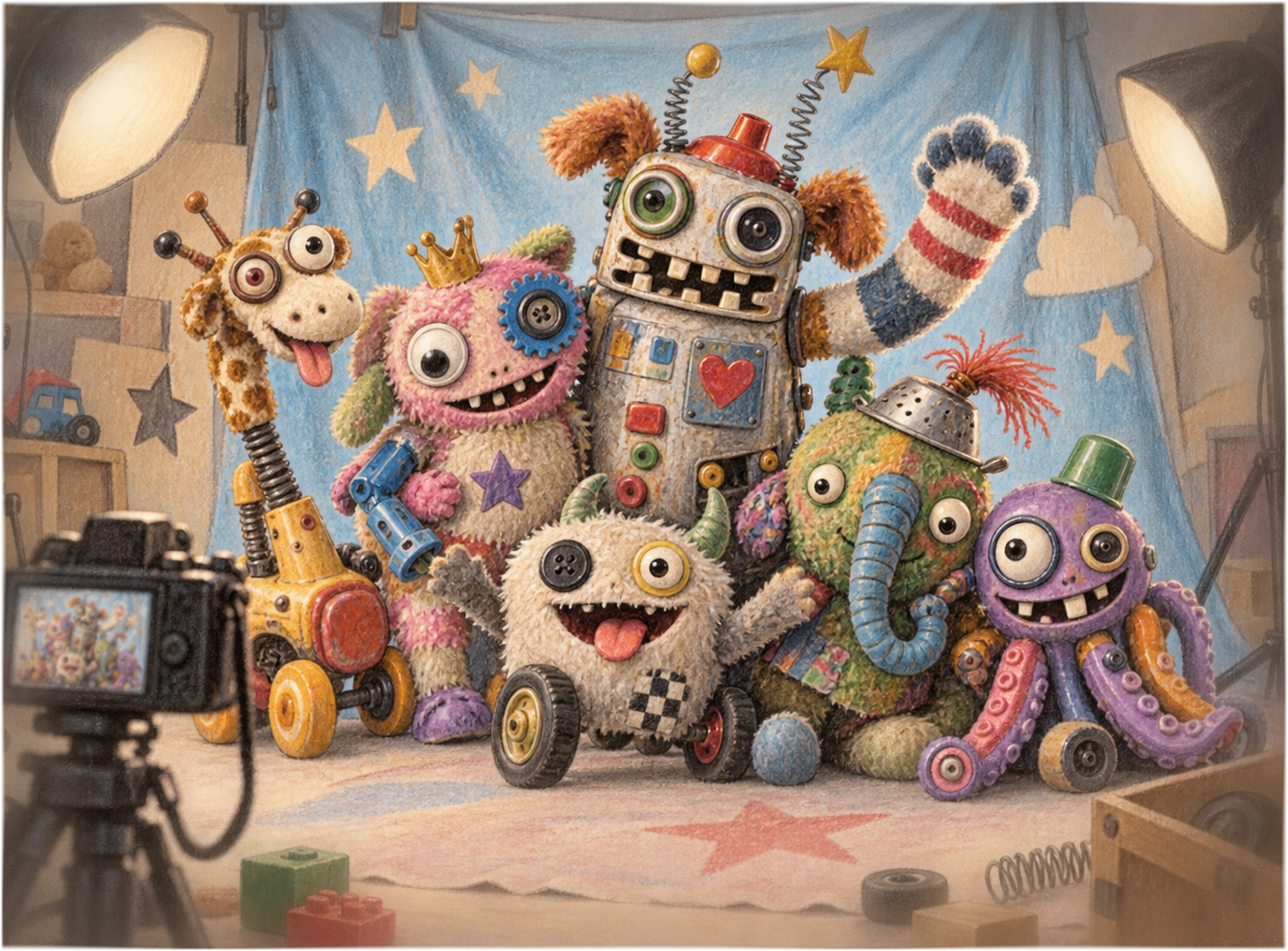
What can you do with a toy robot that has lost an arm? Or a cuddly toy nobody wants any more, or a plastic figure that has long since gone out of fashion? Brighton has an unusual answer: take them apart, combine the pieces and make a monster. Perhaps the robot acquires an animal’s head; perhaps a small plastic figure suddenly sprouts tentacles. What was once unwanted plaything takes on a new shape — and on Saturday evening, a second life on the side of a building.
The project is called Monster Mashed. At Brighton Youth Centre, young people have been turning discarded toys into fantastic hybrid creatures. On 24 October, their creations are due to appear as an animated short film projected onto the building for the opening of the youth arts festival B.fest. The work is also part of Dreamy Place, a festival exploring digital art, creative technology and new ways of looking at our environment.
A Toy Graveyard Becomes a Workshop
Plastic figures, small robots, stuffed animals and assorted toy parts share one fate: once broken or no longer wanted, they often end up in the bin. Yet they still contain an abundance of materials, shapes and colours.
Artists David and Tamsin Allistone of Exploring Senses made those cast-offs the starting point for an unusual art project. Young people aged 13 to 18 were invited to create their own monsters from unwanted toys. The first workshop took place on 29 September. Repair was not the aim: the figures were not supposed to look as they had before. Participants could dismantle them, rearrange their parts and change them at will. Pieces from different toys became imaginary creatures unconstrained by familiar designs.
After all, a creature can be machine and animal at once, have several eyes or sport limbs borrowed from entirely different figures. What initially looks like delightfully chaotic craftwork also raises a question: when has an object really reached the end of its useful life?
Giving Plastic a Personality
A shop-bought toy usually comes with a finished appearance. Someone else has decided what it should look like, what it represents and what story goes with it. Toy hacking — the creative dismantling and alteration of toys — reverses that relationship. The manufacturer no longer has the last word; the person recombining the pieces does.
Even apparent mistakes gain value. An eye at a funny angle, an oversized head or an arm in an unexpected place might be considered a defect in a factory-made toy. For a monster, those quirks may be precisely what gives it character.
Nor did the work end when the monsters had been assembled. At a second workshop on 6 October, the young artists took their creations into the digital world. They photographed the figures and edited the images using Procreate. Digital collages, new backgrounds and animation techniques allowed these previously motionless beings to spring to life.
When a Wall Becomes a Monster Cinema
David and Tamsin Allistone are bringing the participants’ work together in a collaborative short film. It is scheduled to run as a looping projection on the outside of Brighton Youth Centre on Saturday evening, between 6 and 9 p.m. The screening is free to attend.
The location matters. Brighton Youth Centre is a place where young people can make music, perform, create art and organise events of their own. Every year, B.fest gives this work a public platform. Running from 24 to 30 October in 2026, the youth arts festival describes itself as being made by young people, for young people.
Its programme includes concerts, dance, film and street art. Young people are more than spectators: they help plan and shape what happens. Monster Mashed fits that spirit particularly well. The characters began as the participants’ ideas, with experienced artists helping them bring those ideas to the screen. Their work will now be visible to the wider town.
Another Response to Throwaway Culture
The project also touches on an issue that reaches far beyond art and toys: what we do with things we no longer need. Reuse does not always mean restoring an object to its original purpose. Sometimes transformation is what opens up new possibilities.
A plastic figure remains plastic even after being turned into a monster. That alone does not solve the problem of waste. But it encourages young people to see objects differently: not only as finished products, but as materials they can work with again.
That approach fits Dreamy Place, taking place in Brighton from 23 to 25 October. The festival explores art, technology and our relationship with the environment. Monster Mashed approaches those questions playfully: rather than lecturing people about rubbish, it shows what might emerge from things that appear to have no further use.
A New Life for Old Toys
On Saturday evening, Brighton’s monsters will not be creatures revived from ancient legends. They have come from the imaginations of young people and a collection of discarded playthings.
A robot that once lost an arm may now form part of a completely different creature. A plastic figure nobody wanted may find a place in a short film. This is neither a technological revolution nor a solution to every waste problem. It is, however, an inventive reminder that an object’s value need not end with the purpose for which it was first made.
Sometimes you have to take something apart to discover what else it could become. And sometimes an old toy only needs a few extra eyes to make everyone look again.