Who decides what belongs on a stage? Tallinn makes room for independent art
On 18 August, a festival without a central jury begins in Tallinn. At Tallinn Fringe, artists and venues find each other directly – and for one month the whole city becomes a stage for independent art.
No jury above the programme
Many large festivals are curated. An artistic director or team chooses a programme from numerous applications and therefore also decides which works the audience will get to see at all.
Tallinn Fringe works differently. According to the festival, its programme is open-access and not centrally curated. Artists approach participating venues directly. If they agree to work together, the event becomes part of the festival.
Artists are not charged an application or participation fee. That lowers one of the barriers facing independent artists and smaller productions.
What does not fit neatly into a category
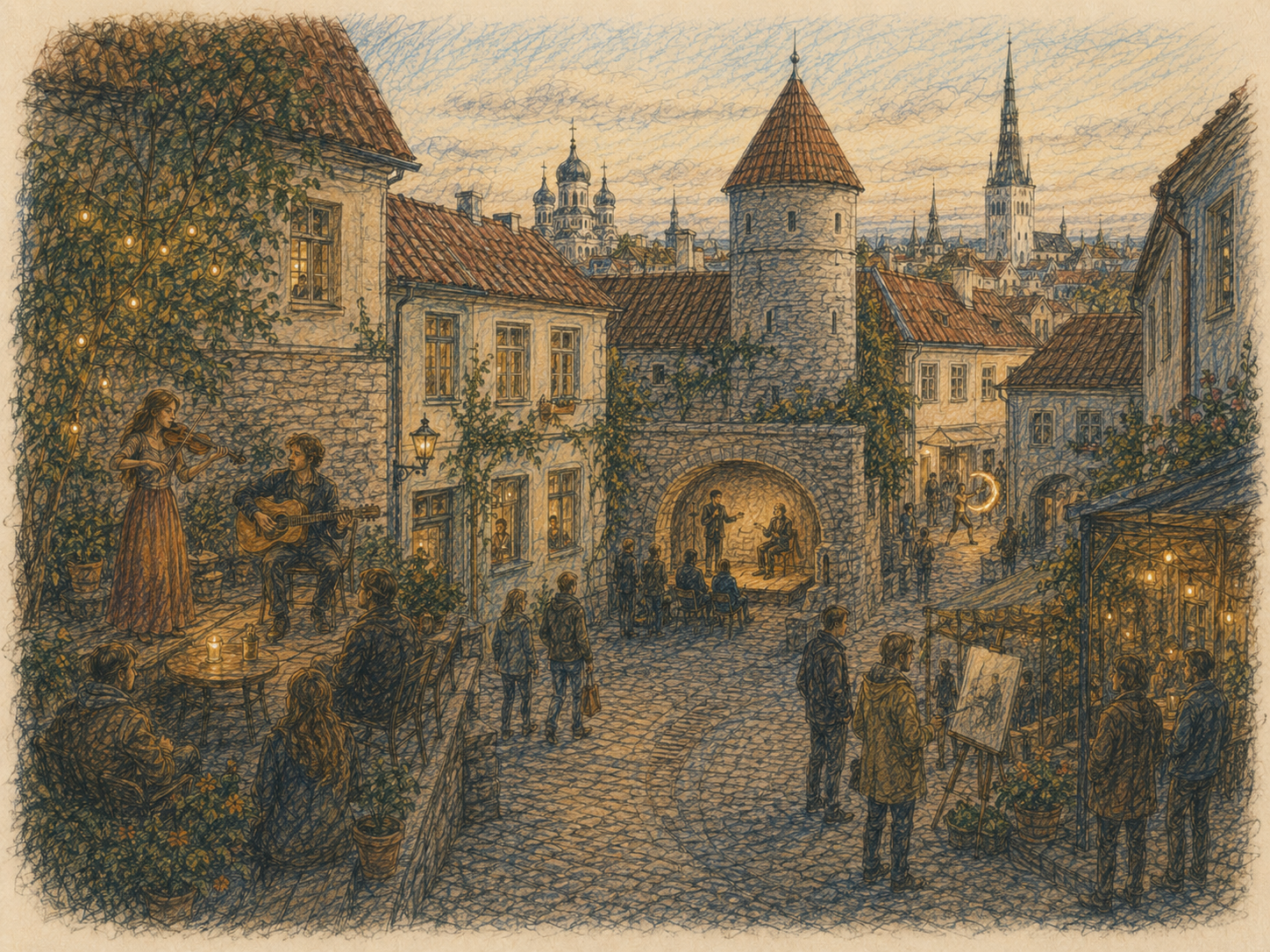
From 18 August to 18 September, the programme spreads across Tallinn. Theatre, music, dance, circus, comedy, spoken word, improvisation and other forms meet in different places. Some performances take place in theatres, others in bars, clubs or smaller and less conventional venues.
This principle can be particularly interesting for work that is difficult to assign to a single category. A performance does not first have to prove that it is “enough theatre”, “enough music” or “enough dance” to fit into a particular programme section.
That does not mean every idea is automatically good. An open festival does not replace artistic quality or the audience's decision about what it finds interesting.
But it changes the question.
A central jury is not the first to decide what might be worth seeing. Artists, venues and ultimately the audience do that together.
From five days to a month
The festival began in Tallinn in 2016 as a five-day event. In 2026 it takes place for the tenth time and now lasts a full month. Events are spread across numerous venues in the Estonian capital.
Local and international artists come together. Some productions work almost without language, while others are performed in Estonian or English.
There is therefore no single large festival stage. Tallinn Fringe consists of many small stages distributed across the city.
Who gets space?
Artistic freedom does not only mean that someone is free to think, write or compose something. For art to become public, it also needs a place: a stage, a room and an audience.
That is where the idea behind Tallinn Fringe becomes particularly interesting.
An open system does not guarantee that every voice will be heard. Venues also have limited capacity, and artists still have to persuade people to show and watch their work. But the route to the stage does not pass exclusively through a single selection committee.
In our eyes, that is an interesting idea: cultural diversity does not arise simply because many different people have something to say. It also needs spaces where those different voices can become visible and audible.
For one month, Tallinn opens quite a few of those spaces.