Many countries, one orchestra: Young musicians from the Western Balkans play together in Ohrid
They come from different countries, speak different languages and began their musical training in different places. On 17 August they will sit together on a stage beside Lake Ohrid.
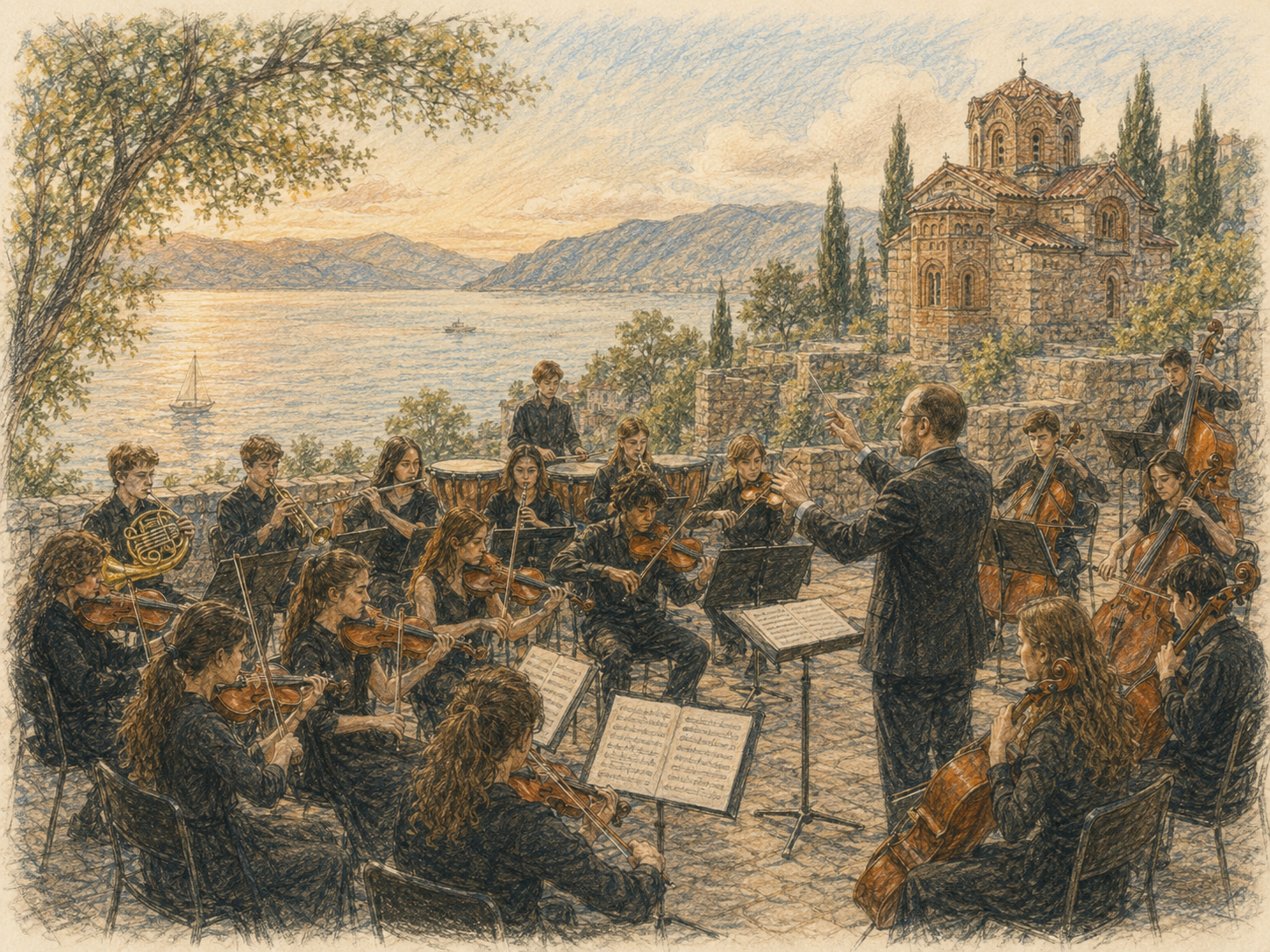
An orchestra does not begin with the first note of a concert. It begins much earlier: with tuning instruments, rehearsals, glances towards the conductor and, above all, listening to the people beside you.
Listen first, then play
For the Western Balkans Youth Orchestra, this everyday principle takes on a particular significance. The project orchestra brings together young musicians from the Western Balkans and this year also welcomes participants from other European countries. On 17 August at 9 pm, the ensemble will perform at Dolni Saraj as part of the Ohrid Summer Festival.
Old repertoire, new voices
The summer project is called “Be Embraced & Music of Today”. The second part of that title matters. The programme includes not only works by established European composers such as Paul Dukas, George Enescu, Ottorino Respighi and Richard Wagner. The orchestra also performs new compositions and music by emerging composers from the Western Balkans.
This means the region is represented not only through music that has long been part of the classical repertoire. Young people from the Western Balkans bring their own musical ideas into the same concert.
Before the tour, the orchestra spends several weeks working together on the programme. Rehearsals, teaching and musical exchange are as much a part of the project as the performances that follow. Ohrid is one stop on a concert tour connecting several countries in the region.
Together does not mean identical
In an orchestra, being together does not mean everyone does the same thing. An oboe remains an oboe; a double bass does not sound like a violin. Sometimes one section carries the melody, sometimes it accompanies, and sometimes it is silent. Those differences are precisely what make a shared sound possible.
Perhaps that is also what makes this project so interesting. The musicians come from different countries, with different languages, educational paths and musical experiences. The fact that such cooperation also has a historical dimension in the region forms part of the orchestra's background. But the focus is not on the past. It is on what is being created today: young musicians rehearsing, travelling and performing together.
When many voices become one sound
On 17 August in Ohrid, the first thing that matters is the music.
Nobody in the audience has to look for a political message in every bar. Dukas, Enescu, Respighi, Wagner and the new works by young composers are allowed simply to be exciting, surprising, powerful or quiet.
And yet the make-up of the orchestra already tells a story. Young people whose home countries are often considered separately sit together on one stage. For one concert, they do not appear as national groups but as strings, woodwinds, brass and percussion. There are entries, rests and shared chords.
In our eyes, that is precisely the beautiful message of this project: making music together does not mean making differences disappear. It means giving them a place in the same piece – and listening closely enough for them to become music together.