When remembrance takes to the water
Malta marks Victory Day on 8 September with Fort St Angelo, several layers of history and a regatta in the Grand Harbour. Follow the boats and you soon arrive at 1565, Napoleon and the Second World War.
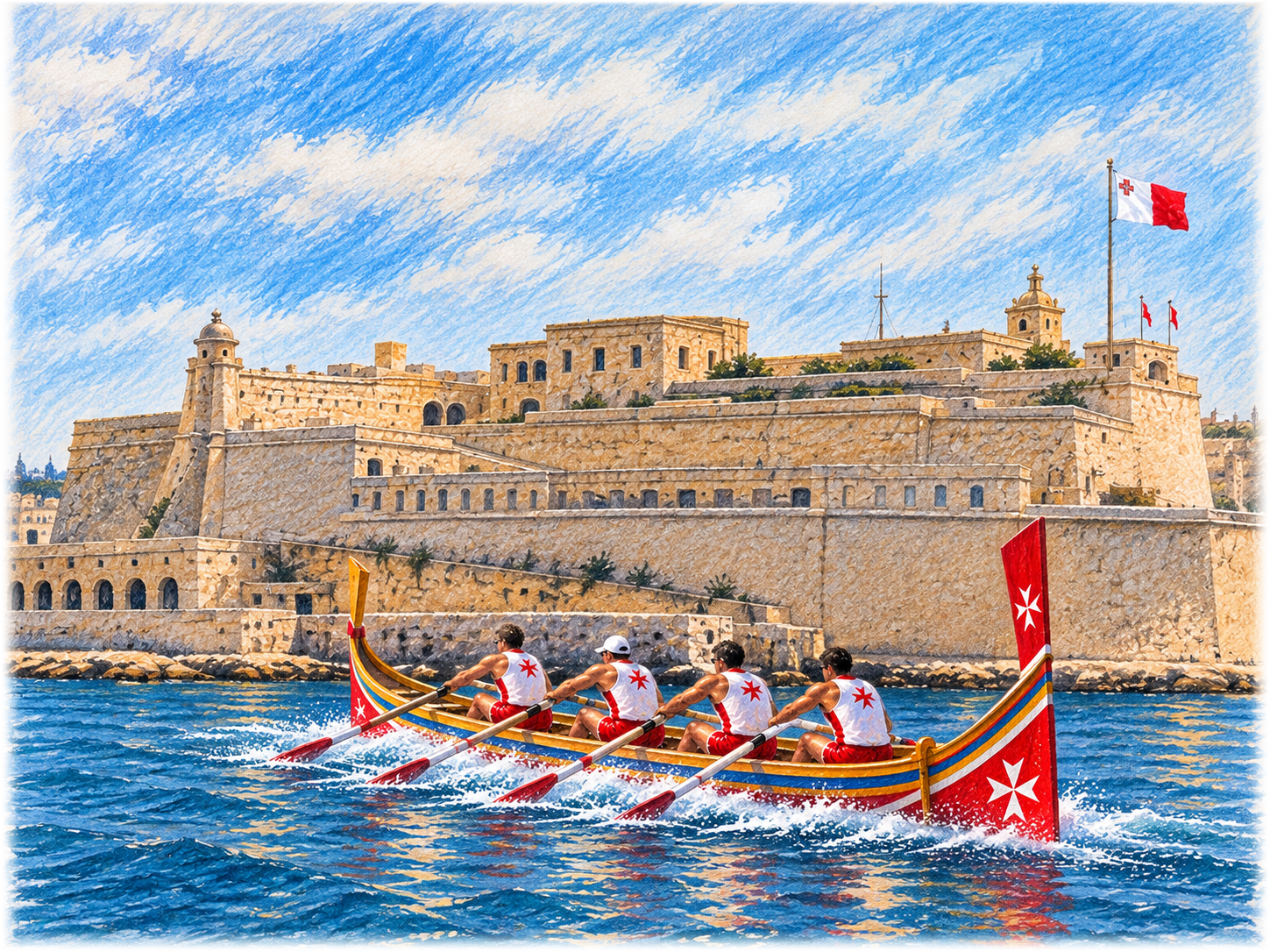
On 8 September, Malta’s Grand Harbour gets crowded. Narrow, brightly painted rowing boats race across the water, crews fight for every metre, and from the bastions of Fort St Angelo spectators can look out over the course.
But anyone who watches only the regatta sees just the newest layer of a story that reaches much further back.
In Malta, 8 September is Victory Day – Jum il-Vitorja. The day does not commemorate just one victory. Events from very different centuries have become attached to the same date.
An island at the centre of the Mediterranean
In 1565, Malta became the scene of one of the best-known sieges in European history. The Ottoman Empire tried to conquer the island. Malta was small, but its position was anything but unimportant: controlling its harbours meant having a valuable base in the middle of the Mediterranean.
At the time, the island was ruled by the Order of St John. Together with Maltese defenders, the knights held out through months of siege. Fort St Angelo, which still rises above the Grand Harbour, was one of the key defensive positions.
At the beginning of September, troops arrived from Sicily to help the defenders. Soon afterwards, the Ottoman forces withdrew. The 8th of September became a day of victory.
So anyone standing on the walls of Fort St Angelo today is not simply looking down from a picturesque old fortress. They are standing in a place that was part of the story itself.
A date that already mattered
Yet 8 September already had a meaning in Malta: it is the feast of the Nativity of the Virgin Mary. In Maltese, it is often known as Il-Bambina.
Several towns in Malta and Gozo still celebrate the day with their own festas. Religious tradition and historical remembrance have therefore become intertwined over the centuries.
And then 8 September acquired another meaning.
1943 – war comes back to Malta
During the Second World War, Malta’s position in the Mediterranean once again became strategically important. The island, then under British rule, lay between the Italian-controlled central Mediterranean and the fighting in North Africa. Malta endured heavy air raids and at times came close to being cut off from supplies.
On 8 September 1943, Italy’s armistice with the Allies was announced publicly. The war did not suddenly end for Malta. But after years of bombing and deprivation, the news marked a decisive turning point.
So one Maltese holiday now carries memories of 1565 and 1943, alongside a religious feast that is older still.
Anyone who keeps researching will come across another year as well: 1800. It leads to Napoleon, a French occupation of Malta – and a Maltese uprising.
And today? Into the boat.
On 8 September 2026, Fort St Angelo once again becomes a centre of the celebrations. Masses are held in the fort’s chapels, the victory of 1565 is commemorated at its monument, and in the afternoon historical re-enactors bring earlier periods to life.
Outside the walls, meanwhile, the present takes over.
The National Regatta is held in the Grand Harbour. From Fort St Angelo, visitors can watch the rowing races against the same harbour landscape that was fought over centuries ago.
For many people, that is precisely what makes Victory Day so compelling. History does not remain only behind museum glass or on memorial plaques. Fortress, religion, family celebration, sport and historical memory stand side by side on a single day.
In Malta, remembrance does not live only in monuments. On 8 September, it takes to the water too.